KOMPASINDOTV.COM, Tangerang, October 15, 2026 – The ACT! (Accelerating Consumer Transformation and Sustainability in Indonesia) Project consortium participated in Trade Expo Indonesia (TEI) 2026 with an interactive booth and two talk shows. This presence demonstrates two key points: the domestic trend toward sustainable product consumption is already underway, and more farmers are adopting sustainable production practices.
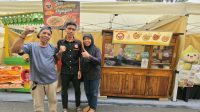
The consortium joined TEI 2026 alongside its members and partners through a series of booth activations and talk shows themed “One Standard, Two Markets: Tracing 4 Indonesian Commodities from Farms to Consumer Tables and Global Export Markets.” This initiative aims to showcase the readiness of Indonesian commodity supply chains in both domestic and global markets, while encouraging industry players to recognize the importance of sustainable practices. Located in Hall B of the ICE (Indonesia Convention Exhibition) BSD City, the ACT! Project booth featured an interactive discussion area with the consortium team, comprehensive educational materials, a virtual reality coffee farm experience, and sustainable coffee tasting sessions with baristas for visitors and businesses.
“Through our participation in the Trade Expo Indonesia 2026, ACT! Project is committed to supporting industry players and farmers in implementing sustainable practices, particularly for key commodities, such as cocoa, coffee, tea, and palm oil. The sustainable consumption trend is a positive opportunity to expand market access and competitiveness in the supply chains,” said Managing Director Asia Pacific Rainforest Alliance, Chandra Panjiwibowo, in Jakarta. October 14, 2026.
Ade Aryani, Executive Director of SCOPI, added, “Through participation in Trade Expo Indonesia 2026, the ACT! Project promotes the connection between sustainable production practices at the farmer level and market needs and consumption behavior. Business players, particularly the hotel, restaurant, and cafe (HoReCa) sector, play a strategic role in expanding consumer access to sustainable products, including coffee. Through collaboration along the value chain and strengthened traceability, we want to encourage sustainability to be not only part of the production process, but also a consideration in product selection by businesses and consumers.”
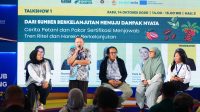
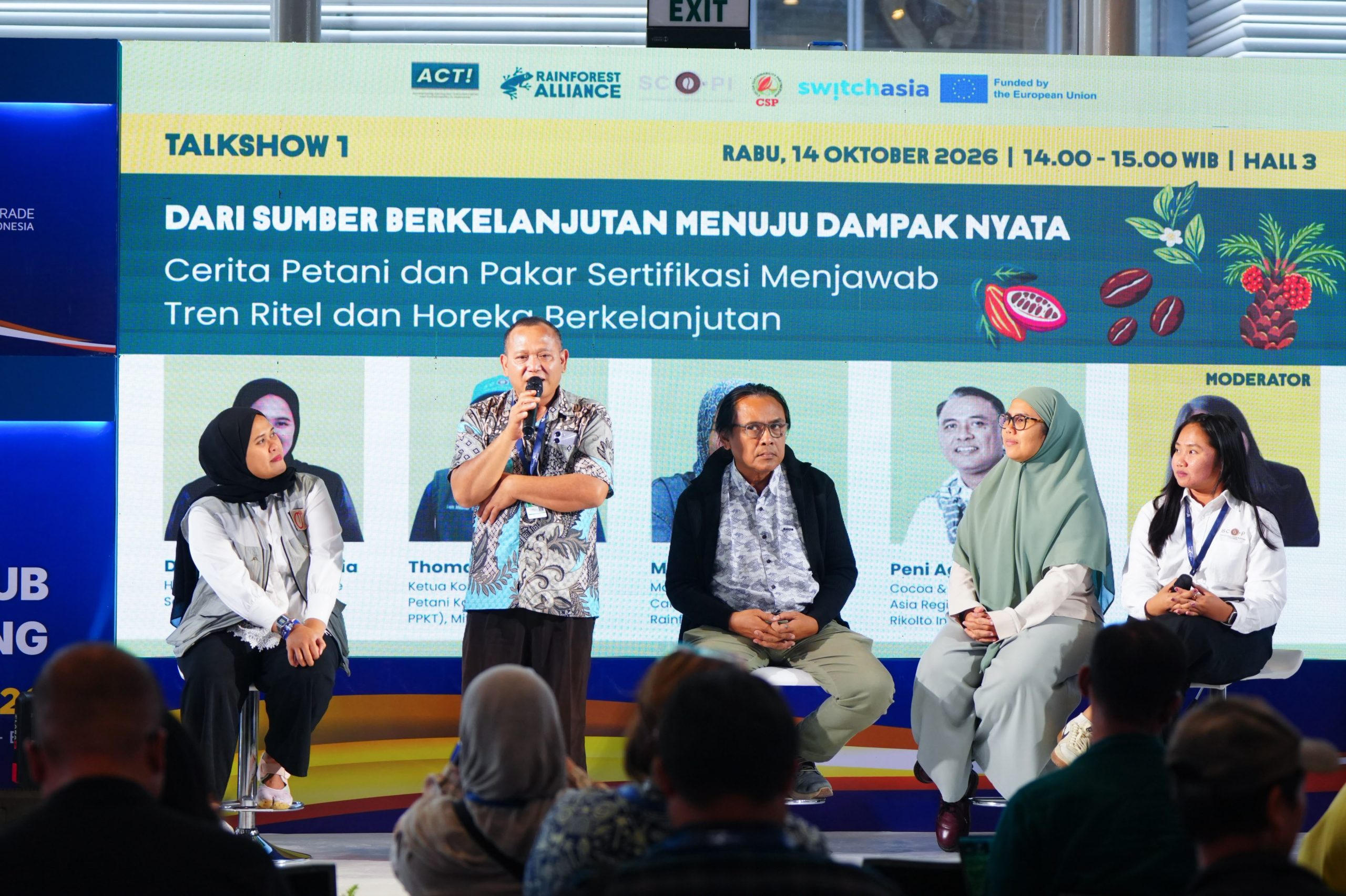
At TEI 2026, the ACT! Project also participated in two talk shows. The first session, titled “From Sustainable Sources to Real Impact: Stories from Farmers & Certification Experts in Responding to Sustainable Retail & HoReCa Trends”, took place on October 14, 2026. Featured speakers included Manager Consumer Campaign and Engagement Rainforest Alliance, Margareth Meutia; a champion farmer supported by Rikolto, Chairman of the Toraja Coffee Farmers Multi-Business Cooperative (KOPTAN PPKT) Thomas Upping; Cocoa & Coffee Programme Technical Advisor in Indonesia, Rikolto, Peni Agustijanto; and Head of People and Coffee Solutions, Anomali Group, Donna Elvina Amelia.
They discussed the dynamics and challenges of shifting farm practices on the ground, real conditions along the production chain, how retail and HoReCa implement sustainable sourcing and certification as part of their marketing strategies, and ACT! Project initiatives to expand the distribution and promotion of sustainable coffee, tea, chocolate, and palm oil.
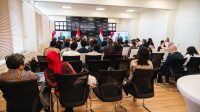
The second session was held on October 15, 2026, titled “Traceability as Value Added: Proving the Readiness of 4 Indonesian Commodities to Face EUDR and Penetrate Global Markets”. The ACT! Project consortium views global trade sustainability requirements as an opportunity, rather than a threat, for producers and farmers to adopt sustainable practices and expand market reach for Indonesian commodities. The speakers consisted of Managing Director Asia Pacific, Rainforest Alliance, Chandra Panjiwibowo; a cocoa champion farmer, Chairperson of the Cocoa Cooperative Kerta Semaya Samaniya (KKS) I Ketut Wiadnyana; and Data Analyst and Certification Manager, Olam Food Ingredients, Florindo Michael Bell.
The talk show emphasized the requirements of the EU Deforestation Regulation (EUDR)—an EU policy requiring targeted commodity products to be deforestation-free—the Indonesia-EU Comprehensive Economic Partnership Agreement (IEU-CEPA), and other sustainability-related export regulations. Experts and farmers explained these topics using facts, data, and field experience, including land boundary mapping, geolocation, and supply chain record-keeping. The discussion also stressed how independent farmers’ readiness in compliance with export regulations can expand opportunities through sustainable practices, traceability technologies and innovations that enhance the global competitiveness of key commodities.
Through these two talk shows, the ACT! Project aimed to demonstrate the success of sustainable practices through stories from farmers, support organizations, and certification owners, as well as the readiness of the coffee, cocoa, tea, and palm oil sectors to meet global sustainability standards. Product traceability also makes the domestic market more accessible: commodities with clear origins can be sold to export buyers and Indonesian consumers under the same standards.
Both sessions delivered a common message: the market for sustainable products exists locally and internationally. As public awareness grows and farmers gain access to technical assistance, industry players need to improve quality through sustainability principles and increase the volume of sustainable or certified products to supply the growing domestic market.
Chandra emphasized that in the future, the ACT! is able to drive the transformation of Indonesia’s commodity sector and enhance the capacity of industry players and farmers to meet the market demand. “Furthermore, industry can demonstrate that sustainable practices can serve as a catalyst for expanding market access and benefits for people and nature,” Chandra stated.
“Looking ahead, we hope the ACT! Project can strengthen collaboration among producers, the HoReCa sector, and consumers to build a more transparent and sustainable value chain. As businesses increasingly consider sustainability aspects in product procurement and consumers better understand the origins of the products they choose, this can open broader market opportunities for Indonesia’s sustainable commodities while supporting farmer welfare and environmental preservation,” said Ade.
To drive sustainable consumption practices, the ACT! Project is currently developing a communication toolkit for HoReCa and retailers, holding stakeholder workshops, and engaging youth across university campuses, such as Universitas Gadjah Mada in Yogyakarta and Universitas Udayana in Bali, to practice sustainable consumption. These actions support the ACT! Project’s targets through 2028: educate 800,000 consumers (50% women) to switch to certified coffee, chocolate, tea, and palm oil products, while promoting 5% growth in domestic consumption and production of certified goods.